
Introduction: Understanding the Digital Advertising Landscape
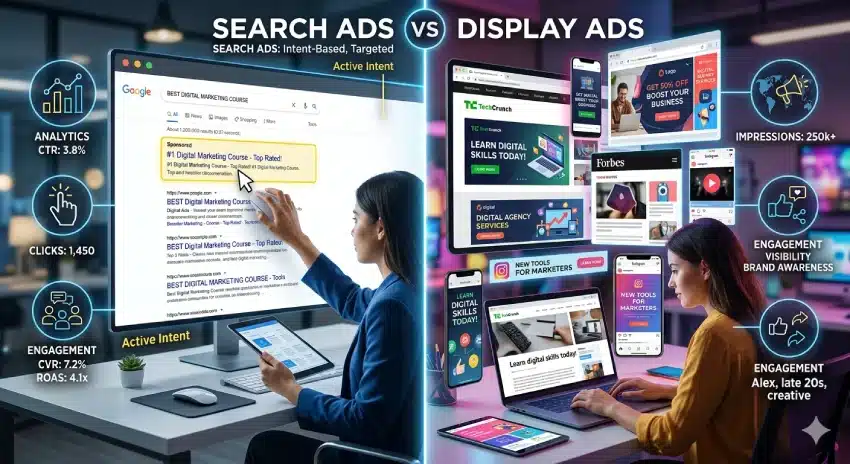
In today’s competitive digital marketing environment, businesses face a critical decision: search ads vs display ads. Search ads target users actively looking for solutions, while display ads focus on visual engagement and brand awareness. Selecting the right strategy can dramatically affect conversions, traffic quality, and overall ROI.
This comprehensive guide breaks down the strengths, limitations, and best practices for both ad types. By the end, you’ll know exactly how to leverage Pay-Per-Click campaigns, SEO strategies, and remarketing efforts to maximize results efficiently.
What Are Search Ads?
Search ads are text-based advertisements that appear on search engine results pages (SERPs) when users type specific keywords. These ads target users with high intent, making them ideal for lead generation and immediate conversions. Platforms like Google Ads dominate this space, offering precise targeting and measurable analytics.
Key Features of Search Ads
- Text-based ads appearing at the top or bottom of SERPs
- Keyword targeting with high commercial intent
- Pay-per-click (PPC) model
- Highly measurable and conversion-focused
Benefits of Search Ads
- High intent targeting: Connect with users actively searching for your products or services.
- Cost efficiency: Pay only when users click your ad, ensuring budget efficiency.
- Immediate traffic: Generate leads quickly with targeted campaigns.
- Measurable results: Integrates with analytics tools for ROI tracking and optimization.
For businesses aiming for instant lead generation, search ads provide higher conversion rates than most other digital advertising channels.
What Are Display Ads?
Display ads are visually engaging advertisements placed across websites, apps, and social media platforms. Unlike search ads, display ads target users based on demographics, interests, or prior browsing behavior, rather than active search intent.
Key Features of Display Ads
- Visual formats including images, banners, and videos
- Audience targeting by demographics, behavior, or retargeting
- Wide reach across millions of websites
- Effective for brand awareness and engagement
Benefits of Display Ads
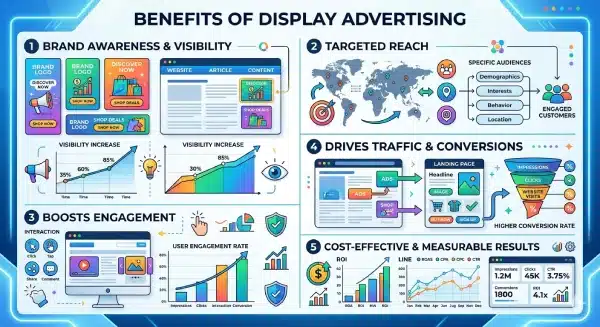
- Brand visibility: Showcase your products to a broad audience across the web.
- Audience targeting: Tailor ads to specific user interests and behaviors.
- Creative flexibility: Use videos, graphics, and interactive content to boost engagement.
- Remarketing opportunities: Reconnect with visitors who previously engaged with your website.
Display campaigns are especially effective for brand reinforcement, new product launches, and nurturing users who aren’t actively searching yet.
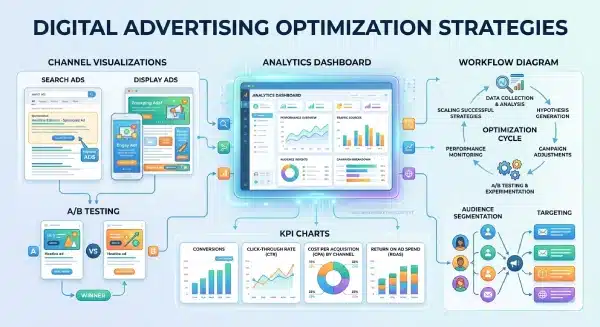
Search Ads vs Display Ads: Key Differences
| Aspect | Search Ads | Display Ads |
|---|---|---|
| Intent | High—users actively searching for solutions | Low to medium—users browsing content |
| Format | Text-based, minimal visuals | Visuals including banners, videos, interactive elements |
| Cost Model | PPC (Pay-per-click) | PPC or CPM (Cost-per-thousand impressions) |
| Best For | Lead generation, conversions | Brand awareness, remarketing |
| Tracking | Highly measurable via clicks and conversions | Measurable via impressions, engagement, and clicks |
How to Decide Between Search Ads and Display Ads
Choosing the right advertising strategy depends on your business goals, budget, and audience. Here’s a breakdown:
1. Marketing Goals
Use search ads for immediate conversions and lead generation. Display ads are best for brand awareness, retargeting, and engaging users who aren’t yet actively searching.
2. Budget Considerations
Search ads often have higher CPC but deliver strong ROI for direct conversions. Display ads are more cost-effective for reach and remarketing campaigns, especially when targeting broader audiences.
3. Audience Targeting
Search ads capture active intent; display ads capture passive interest. Combining both strategies enhances reach and performance. Businesses can also leverage professional services like Pay-Per-Click management to maximize campaign efficiency.
Case Studies: Search Ads vs Display Ads in Action
Case Study 1: E-commerce Brand
An online fashion store ran search ads targeting high-intent keywords such as “buy summer dresses online.” Within the first month, sales increased by 25%, highlighting the effectiveness of search campaigns for immediate conversions.
Case Study 2: SaaS Company
A SaaS provider implemented display ads for remarketing users who visited their pricing page but didn’t convert. This approach led to a 40% increase in trial sign-ups, proving the power of visual remarketing campaigns.
These case studies show how integrating SEO with paid campaigns maximizes results and ROI.
Tips for Maximizing ROI on Both Ad Types
- Integrate campaigns: Combine search ads for conversions and display ads for brand awareness.
- Segment audiences: Personalize ads based on behavior, demographics, and interests.
- Optimize creatives: Test and refine visuals for display ads to improve engagement.
- Track KPIs: Monitor CTR, conversions, and ROI for continuous optimization.
- Leverage remarketing: Retarget previous visitors across both search and display networks.
For businesses aiming to strengthen their campaigns, exploring Social Media Management and Google My Business services can drive additional visibility and leads.
Common Mistakes to Avoid
- Focusing only on clicks instead of conversions
- Ignoring audience segmentation
- Running display campaigns without clear messaging or CTAs
- Neglecting retargeting strategies
- Failing to analyze and optimize campaigns regularly
Frequently Asked Questions
Which performs better: search ads or display ads?
It depends on your marketing goal. Search ads drive immediate conversions, while display ads are better for brand awareness and remarketing campaigns.
Can I use both search and display ads together?
Yes. Combining search and display campaigns allows you to capture high-intent traffic while nurturing users through visual remarketing, maximizing ROI.
How should I budget for search vs display ads?
Allocate more budget to search ads for direct conversions. Use display ads for broader reach and remarketing at lower costs. Consider customizable packages with expert guidance.
Conclusion: Choosing the Right Strategy for Your Business
Understanding search ads vs display ads is essential for effective digital marketing. Search campaigns convert high-intent users quickly, while display campaigns enhance brand awareness and nurture prospects. Combining both with professional services like Web Development and Website Maintenance ensures optimized ROI.
Ready to elevate your digital advertising results? Contact us today to create a tailored marketing strategy that drives conversions and growth.