
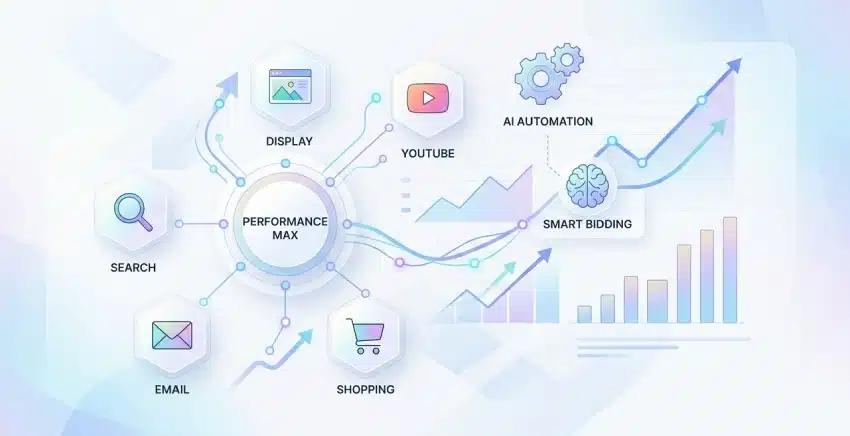
Performance Max Campaigns are reshaping how businesses run Google Ads by combining automation, machine learning, and multi-channel reach into a single campaign structure.
Performance Max Campaigns (PMax) have quickly become one of the most powerful tools inside Google Ads. Instead of managing multiple campaigns for Search, Display, YouTube, Gmail, and Discover separately, advertisers can now run one unified campaign that uses AI to optimize performance across all channels.
This shift is both exciting and challenging. While automation improves efficiency and scalability, it also reduces manual control, making strategy and data inputs more important than ever.
In this guide, we’ll break down the real-world pros and cons of Performance Max Campaigns, how they work, and the exact best practices top marketers use to generate consistent ROI.
What Are Performance Max Campaigns?
Performance Max Campaigns are goal-based campaigns in Google Ads that use automation and machine learning to deliver ads across all Google inventory from a single campaign.
Channels Included in Performance Max Campaigns
- Google Search
- YouTube
- Display Network
- Gmail
- Google Discover
- Google Maps
Instead of choosing keywords and placements manually, advertisers provide creative assets, audience signals, and conversion goals. Google’s algorithm then decides where, when, and to whom to show ads.
If you’re already investing in Pay-Per-Click advertising services, understanding PMax is essential for staying competitive.
How Performance Max Campaigns Work
Performance Max Campaigns rely heavily on automation and data inputs. The system uses machine learning to optimize campaigns in real-time based on user behavior and intent signals.
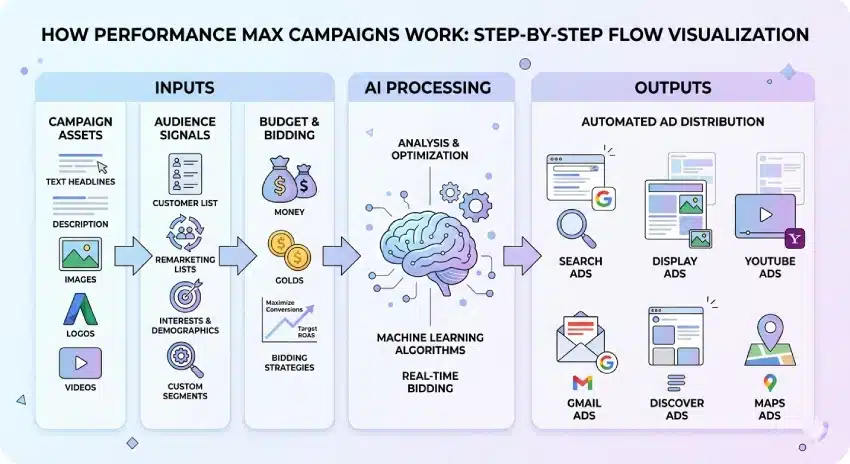
Key Components
- Asset Groups: Combination of headlines, descriptions, images, and videos
- Audience Signals: Helps Google understand your ideal customer
- Bidding Strategy: Typically focused on conversions or conversion value
- Conversion Tracking: The backbone of campaign success
Step-by-Step Flow
- You upload creatives and define goals
- Google tests different combinations
- Machine learning identifies high-performing combinations
- Budget is automatically allocated to top-performing channels
To ensure your campaigns perform optimally, combining PMax with strong SEO strategies can significantly boost long-term visibility.
Pros of Performance Max Campaigns
Performance Max Campaigns offer several advantages that make them highly attractive for businesses looking to scale efficiently.
1. Full Funnel Coverage
PMax reaches users across the entire customer journey—from awareness to conversion—without needing separate campaigns.
2. Advanced Automation
Google’s AI optimizes bids, placements, and creatives in real time, saving time and improving performance.
3. Better Conversion Optimization
With proper tracking, Performance Max Campaigns excel at maximizing conversions and ROAS.
4. Access to Hidden Inventory
You gain exposure to placements like Discover and Gmail, which are often underutilized in traditional campaigns.
5. Simplified Campaign Management
Managing one campaign instead of five reduces complexity, especially for growing businesses.
If you’re managing multiple digital channels, integrating PMax with social media marketing strategies can create a powerful omnichannel presence.
Cons of Performance Max Campaigns
While powerful, Performance Max Campaigns are not perfect. Understanding the limitations is key to avoiding costly mistakes.
1. Limited Control
You don’t have full visibility over keywords, placements, or exact targeting decisions.
2. Reduced Transparency
Detailed performance data for specific channels is limited, making optimization more challenging.
3. Heavy Dependence on Data
Without accurate conversion tracking, campaigns can perform poorly.
4. Learning Phase Takes Time
It may take several weeks for the algorithm to fully optimize performance.
5. Creative Dependency
Weak creatives can significantly impact results since automation relies on provided assets.
Best Practices for Performance Max Campaigns
To get the most out of Performance Max Campaigns, you need a strategic approach—not just automation.
1. Focus on High-Quality Conversion Tracking
Ensure accurate tracking using tools like Google Analytics. Track meaningful actions such as purchases, leads, or sign-ups.
2. Use Strong Audience Signals
Provide data like:
- Customer lists
- Website visitors
- Custom intent audiences
This helps the algorithm learn faster.
3. Create High-Quality Asset Groups
Include:
- Multiple headlines
- Engaging descriptions
- High-resolution images
- Video creatives
If you need professional branding, consider brand kit design services for consistent visual identity.
4. Segment Campaigns Strategically
Instead of one campaign for everything, segment based on:
- Product categories
- Audience types
- Geographic locations
5. Allow Sufficient Budget & Time
Give campaigns at least 2–4 weeks and a reasonable budget before making major changes.
6. Continuously Optimize Creatives
Regularly update and test new creatives to improve engagement and conversion rates.
7. Align with Website Experience
Your landing pages must be optimized for speed and conversions. Explore web development services to improve performance.
When Should You Use Performance Max Campaigns?
Performance Max Campaigns are ideal in the following scenarios:
- You want to scale conversions quickly
- You have strong conversion data available
- You want to simplify campaign management
- You are running eCommerce or lead generation campaigns
When to Avoid
- When you need full control over targeting
- When conversion tracking is not set up properly
- When testing very niche audiences
Real-World Strategy Insight
Top-performing marketers don’t rely solely on automation. They combine:
- Data-driven decision-making
- Creative testing
- Audience segmentation
- Cross-channel marketing
This hybrid approach ensures consistent performance and long-term scalability.
Performance Max Campaign Pricing Strategy
Running Performance Max Campaigns doesn’t require fixed pricing, but smart budgeting is crucial.
- Small businesses: Starting from ₹7,999/month
- Mid-level campaigns: ₹15,000–₹30,000/month
- High-scale campaigns: ₹50,000+/month
Every business is different, so customized packages are recommended.
Want expert help? Get a tailored strategy from our team—contact us today and scale your campaigns faster.
Frequently Asked Questions
What are Performance Max Campaigns in Google Ads?
Performance Max Campaigns are automated campaigns that run ads across all Google channels using machine learning to maximize conversions.
Are Performance Max Campaigns better than Search campaigns?
Performance Max Campaigns can outperform traditional campaigns when conversion tracking and data inputs are strong, but they offer less manual control.
How long do Performance Max Campaigns take to work?
Performance Max Campaigns typically require 2–4 weeks to exit the learning phase and deliver stable, optimized results.
Do Performance Max Campaigns require a large budget?
While not mandatory, a reasonable budget helps the algorithm learn faster and improves overall campaign performance.
Final Thoughts: Should You Use Performance Max Campaigns?
Performance Max Campaigns are not just a trend—they are the future of Google Ads. However, success depends on strategy, data quality, and execution.
If you combine automation with expert planning, strong creatives, and optimized landing pages, PMax can become your most powerful growth channel.
Ready to scale your business with high-performance campaigns? Explore our full range of digital marketing services or reach out for a customized growth strategy today.